
No products in the cart.
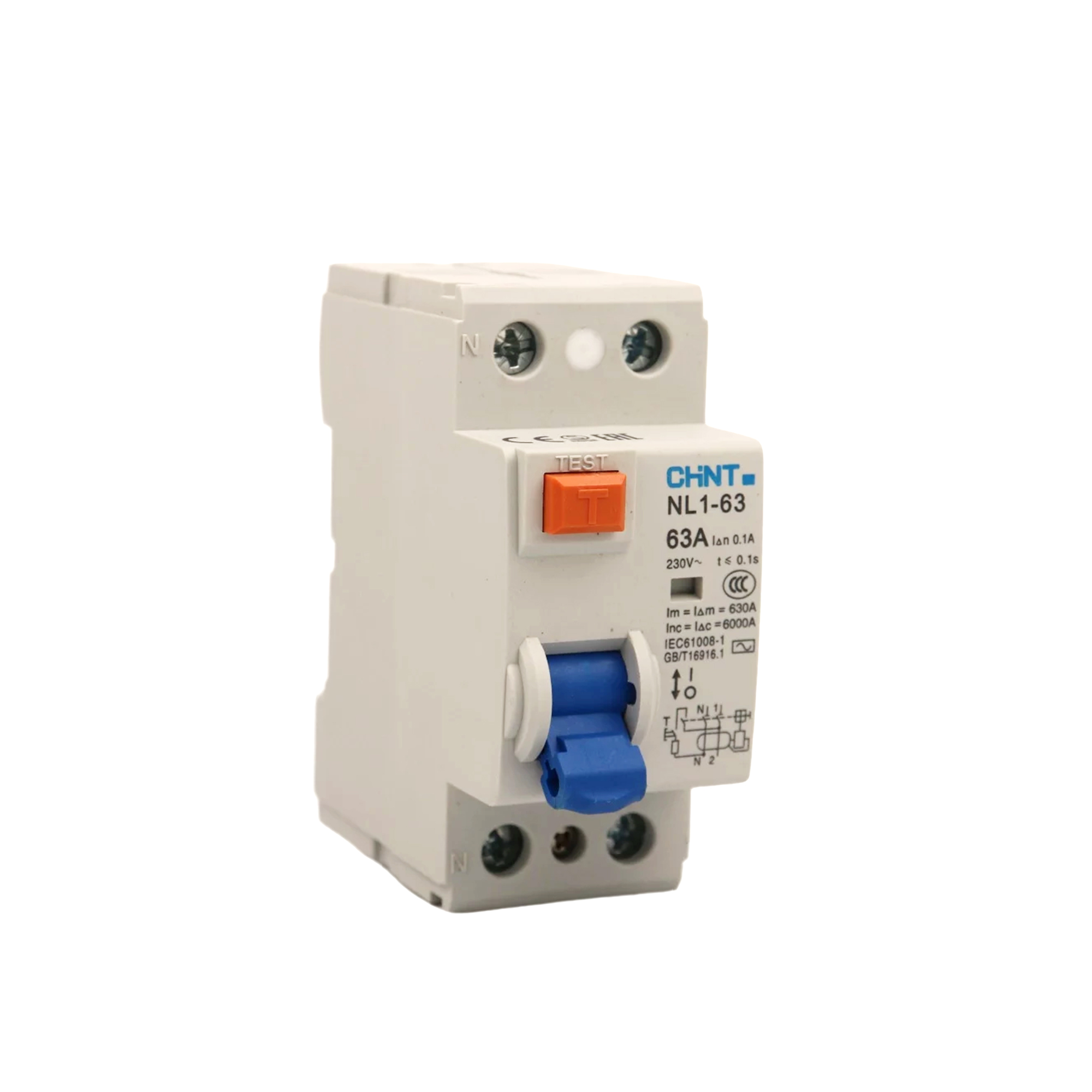
An RCCB (Residual-Current Circuit Breaker) is a safety electrical device that protects against electric shock and fire by monitoring current leakage and rapidly interrupting the circuit. It works on the principle that in a healthy circuit, the current flowing in must equal the current flowing out. If it detects a difference, it assumes a fault is occurring and shuts off the power.
How it works
- Current comparison: An RCCB continuously compares the electrical current going into a circuit with the current coming back out.
- Leakage detection: If the live and neutral currents are unequal, the device assumes current is leaking, likely through a person or faulty appliance.
- Rapid interruption: The RCCB immediately trips and breaks the circuit, shutting off the power to prevent serious harm or fire.
- Sensitivity: RCCBs have a sensitivity rating, often measured in milliamperes (mA), that determines how small a leakage current will cause it to trip.
Applications and types
- Protection: RCCBs protect against earth faults and leakage currents, which are especially important for preventing electric shock.
- Location: They are typically installed in a building’s distribution or breaker box.
- Types: They are available in different types (e.g., AC, A, B) to detect various types of currents, and some include a “Test” button to verify functionality.
- Tripping levels: Sensitivity levels, such as 10mA or 30mA, are chosen for shock protection, while higher ratings like 100mA or 300mA are for fire and equipment protection.


Reviews
There are no reviews yet.