
No products in the cart.
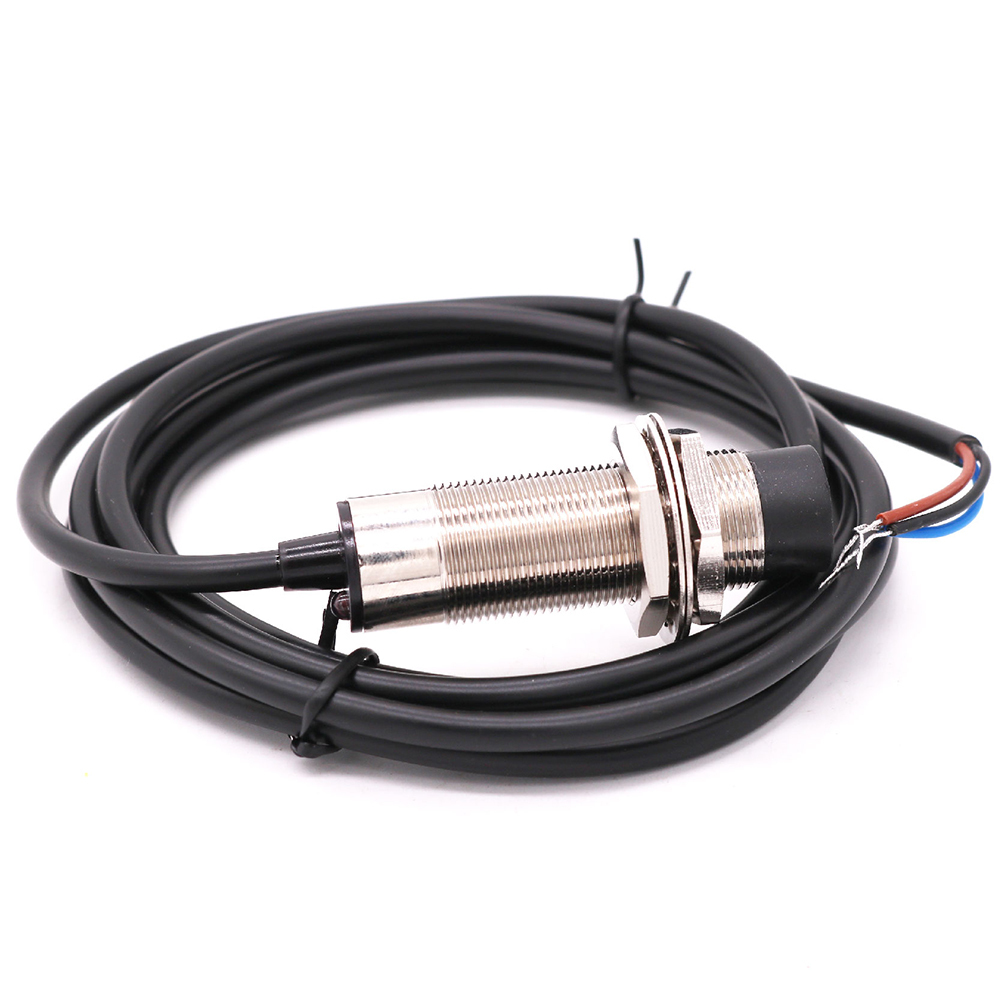
A capacitive proximity sensor switch is a non-contact electronic device that detects both metallic and non-metallic objects (such as plastics, liquids, glass, and wood) by measuring changes in an electrostatic field . Unlike inductive sensors that only detect metal, capacitive sensors respond to any material with a dielectric constant different from air.
How Capacitive Proximity Sensor Switch Works
The sensor generates an invisible electric field in front of its sensing face using internal conductive plates connected to a high-frequency oscillator.
- Field generation. The sensor’s internal oscillator maintains a stable baseline electric field when no object is nearby.
- Capacitance shift. When a target enters this detection zone, it alters the dielectric constant and increases the circuit’s capacitance.
- Signal triggering. Once the capacitance shift crosses a preset threshold, a comparator triggers the output switch and lights up an indicator LED.
- Through-wall sensing. Because the electric field can penetrate thin non-metallic barriers, the sensor can detect liquids or powders inside plastic or glass containers.
Capacitive Proximity Sensor Switch Key Specifications & Wiring
Most industrial capacitive switches share standardized electrical configurations and physical housings,
- Supply voltage. Standard DC models typically operate on 6–36V DC (most commonly 10–30V DC).
- Sensing distance. Detection ranges typically span from 1 mm to 25 mm depending on housing diameter, though larger industrial units reach up to 40 mm.
- Sensitivity adjustment. A built-in potentiometer screw allows you to tune the detection distance clockwise to increase range or counterclockwise to ignore nearby walls.
- Standard color-coded wiring. Four-wire DC models use brown for positive voltage (+V), blue for ground (0V), black for Normally Open (NO) output, and white for Normally Closed (NC) output.
- Output logic. Models are sold as either NPN (sinking, switches to ground) or PNP (sourcing, switches to positive voltage).
Capacitive Proximity Sensor Switch Common Applications
- Liquid level monitoring. Detects water, oil, or chemicals through sight glasses and plastic tanks without touching the fluid.
- Packaging and conveyor lines. Counts non-metallic items like cardboard boxes, plastic bottles, and filled bags.
- 3D printer bed leveling. Frequently used to detect glass or PEI print beds without physical contact.
Be the first to review “Capacitive Proximity Sensor Switch”
Related products
Sensors
KSh10,500.00
KSh2,500.00

KSh2,500.00

KSh3,600.00

Sensors
KSh3,600.00
Reviews
There are no reviews yet.